Water hardness in Barcelona: official data by supply zone
How hard is the tap water in Barcelona, Badalona, L'Hospitalet, Sant Cugat and Esplugues? These are the latest values notified to the Ministry of Health's SINAC database, read on 9 October 2026, and what they mean for limescale and taste.
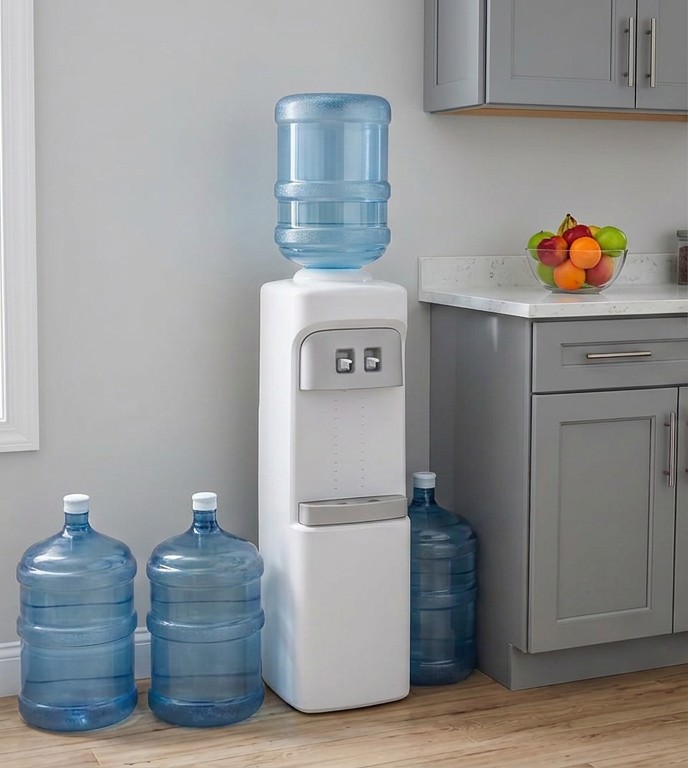
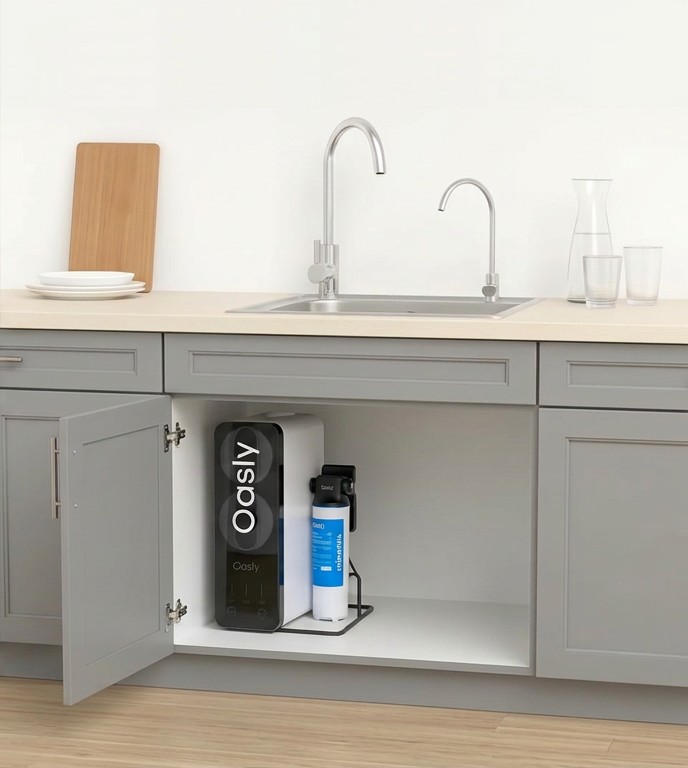
Left: a bottled-water dispenser. Right: the Oasly reverse osmosis unit under the sink. Two alternatives to drinking hard tap water as it comes.
Tap water hardness by supply zone
SINAC publishes data per supply network (zone), not per neighbourhood, so the table is organised by zone. Hardness is given in French degrees (°f): 1 °f equals 10 mg/L of calcium carbonate. The latest bulletin for every network listed says the water is fit to drink.
Barcelona · Zona D (72% of the population)
32.9 °f · hard (329 mg/L CaCO₃) — sample 04/08/2026
Hard water, just above the 32 °f threshold. Limescale builds up on kettles, taps and appliances, and some people notice the taste.
Barcelona · Zona B (10%)
28.4 °f · moderately hard (284 mg/L CaCO₃) — sample 20/07/2026
Moderately hard, near the top of that band. Limescale is still noticeable.
Barcelona · Zona E (9%)
18.6 °f · moderately hard (186 mg/L CaCO₃) — sample 03/08/2026
Moderately hard, but well below zones B and D. Less limescale.
Badalona · Zona E (43%)
10.8 °f · soft (108 mg/L CaCO₃) — sample 07/01/2026
Soft water. Little limescale: hardness is not a reason to filter here.
L'Hospitalet · Zona B (94%)
40.0 °f · hard (400 mg/L CaCO₃) — sample 07/04/2026
The hardest value in this table. Expect limescale on kettles, taps and appliances.
Sant Cugat · Xarxa Ter (70%)
17.4 °f · moderately hard (174 mg/L CaCO₃) — sample 30/03/2026.
Moderately hard, at the lower end. Some limescale.
Esplugues · Zona B (81%)
26.6 °f · moderately hard (266 mg/L CaCO₃) — sample 05/01/2026
Moderately hard. Limescale is noticeable.
Scale (FACSA, °f): under 7 very soft, 7–14 soft, 14–32 moderately hard, 32–54 hard, over 54 very hard. Values are the latest results notified to SINAC for each network, read on 9 October 2026; the percentage is the share of the municipality's population that SINAC lists for that zone. Badalona Zona D (53%) is not in the table because its latest hardness sample is from June 2025 (11.7 °f, soft). Sant Cugat's smaller networks (Xarxa Mixta 13.0 °f, Les Planes/La Floresta 26.3 °f, Can Barata 21.7 °f) and zones with no hardness data in SINAC are not shown.
Sources
- SINAC: Barcelona, Zona D
- SINAC: Barcelona, Zona B
- SINAC: Barcelona, Zona E
- SINAC: Badalona, Zona E
- SINAC: Badalona, Zona D
- SINAC: L'Hospitalet de Llobregat, Zona B
- SINAC: Sant Cugat del Vallès, Xarxa Ter
- SINAC: Esplugues de Llobregat, Zona B
- FACSA: water hardness scale (PDF)
- Aigües de Barcelona: 2024 operating report (PDF)
- Real Decreto 3/2023 on drinking water quality (BOE)
Questions about water hardness in Barcelona
Is Barcelona's tap water hard?
In most of the city, yes. Zona D, which SINAC lists as serving 72% of Barcelona's population, measured 32.9 °f (329 mg/L CaCO₃) in its latest sample (4 August 2026): hard on the FACSA scale. Zona B (28.4 °f) and Zona E (18.6 °f) are moderately hard.
Can you drink tap water in Barcelona?
Yes. Drinking water in Spain has to meet Real Decreto 3/2023, and the latest SINAC bulletin for each of Barcelona's supply zones says "agua apta para el consumo": fit to drink. Hardness is not a health problem; it affects taste and limescale.
Why does Barcelona tap water taste of chlorine?
Mains water is disinfected so that it stays safe all the way through the pipes to your tap. Some people notice the taste or smell of that disinfection, especially if they are used to bottled water. It is part of what keeps tap water safe, not a sign that something is wrong.
Does reverse osmosis remove limescale?
It reduces the dissolved minerals that cause limescale, such as calcium and magnesium, in the water that passes through it. That is why Oasly remineralises the water afterwards with calcium, magnesium and potassium, so it does not taste flat. It only treats the water from its own faucet, not the rest of the house.
Water softener or reverse osmosis?
They do different jobs. A water softener (descalcificador) treats all the water entering your home, which protects pipes, boilers, showers and appliances from limescale. Under-sink reverse osmosis treats the water you drink and cook with, at one faucet. If limescale around the house is your main problem, a softener is the right tool. If it is the taste of your drinking water, reverse osmosis fits better.
How can I find out the hardness of my home's water?
Three ways. Look up your municipality in SINAC (sinacv2.sanidad.gob.es) to see which supply zones serve it and their latest values. Use hardness test strips at home. Or, if you get Oasly, we measure your water's TDS (total dissolved solids, a related measure of what is dissolved in it) before and after installation and show you both numbers.
Where does Barcelona's water come from?
According to Aigües de Barcelona's 2024 operating report, 59.5% of the water it supplied was its own production: Llobregat river water treated at the Sant Joan Despí plant, plus groundwater. The other 40.5% was bought from ATL, which covers Ter river water from the Sau and Susqueda reservoirs (treated at Cardedeu), Llobregat water treated at Abrera, and the Llobregat desalination plant.
Which part of Barcelona has the hardest water?
SINAC reports by supply zone, not by neighbourhood, so we can only answer by zone. Of the three zones serving Barcelona, Zona D had the highest value (32.9 °f), followed by Zona B (28.4 °f) and Zona E (18.6 °f). Across the municipalities on this page, L'Hospitalet's Zona B was the hardest (40.0 °f) and Badalona the softest (Zona E 10.8 °f in January 2026; Zona D 11.7 °f in its June 2025 sample).
Is hard water bad for your health?
Hardness is not a health problem. The minerals that make water hard are mainly calcium and magnesium. What hardness changes is the taste and the limescale on kettles, taps and appliances.
Is the water hard in Badalona, L'Hospitalet, Sant Cugat and Esplugues?
It varies. Badalona's water is soft (10.8 °f in Zona E). L'Hospitalet's main zone is hard (40.0 °f). Sant Cugat's Xarxa Ter (17.4 °f) and Esplugues' Zona B (26.6 °f) are moderately hard. These are SINAC's latest values per zone, read on 9 October 2026.
What Oasly costs
Published prices for Barcelona city, with installation and maintenance included in the subscriptions. No minimum term.
Unit, installation, maintenance and yearly filter swap included
The same service in one payment; 13 four-weekly payments add up to €323.70.
€629 machine only, €699 installed in Barcelona
Badalona, L'Hospitalet, Sant Cugat and Esplugues: €27.90 / 4 weeks or €279/year.


On desktop? Start on your phone: